Prentisstown Manhood-Killing Rite
The Knife of Never Letting GoThe Prentisstown Manhood-Killing Rite is a system for making boys into men through a killing on each boy’s thirteenth birthday. Rather than marking adulthood through age or new responsibilities alone, it requires a boy to kill another man by himself, while the town’s adults witness the act and become complicit. The rite converts a threshold intended to signify maturity into an instrument of political control, and makes shared guilt part of the identity it imposes.
Origins and Justifications
The age threshold is presented as an old custom of the New World. When Viola asks why people become adults at thirteen, Todd explains that Aaron treated the age as scriptural: it symbolized eating from the Tree of Knowledge and passing from innocence into sin. That explanation gives the transition a religious meaning, linking adulthood with a loss of innocence. The rite’s familiar language of growing up therefore disguises a violent definition of what a man must become.
Todd also recounts Ben’s different explanation for the thirteen-year threshold. On an isolated planet with a small population, the community needs as many adults as possible, so thirteen is the age at which young people begin carrying real responsibilities. The account distinguishes the practical purpose Ben identifies from the meaning Aaron assigns to it. A rule that might organize the community’s labor and responsibilities is made to authorize a killing; age itself does not explain the violence that Prentisstown attaches to becoming a man.
The calendar sharpens the importance of the threshold: Todd describes a year as thirteen cycles of thirteen months. His explanation establishes thirteen as a measure of time in the New World, while the conversation’s immediate concern is the town waiting for its last boy to become a man. The age rule is thus not merely background custom. In Prentisstown, the final boy’s birthday becomes a date around which the town and its ruler organize their expectations.
The Killing and Its Concealment
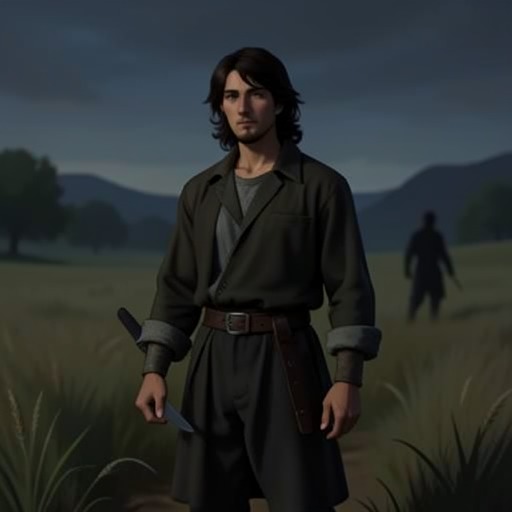
The rite’s defining requirement is that the boy kill another man on his own. Todd understands this as the reason boys who have become men do not speak with boys who remain boys: the boundary separates those already made participants from the boy who has not yet been made responsible for the town’s crimes. When a boy crosses it, he is told the truth, or a version of the truth, and is made complicit. Knowledge arrives not as release from the system but as the point at which the system recruits him into it.
The victims’ apparent disappearances conceal what the town is doing. Todd recalls Mr Royal, his former schoolteacher, whose death had been understood as suicide; he learns that Seb Mundy killed him on his thirteenth birthday while the town’s men watched. Mr Gault, whose sheep flock Todd’s family took over after he supposedly disappeared, had tried to flee through the swamp. Mayor Prentiss caught him and arranged for Mr Prentiss Jr to kill him on his own thirteenth birthday. These cases show two ways a victim could be supplied: a man attempting to escape could be captured, or the authorities could select someone from Prentisstown whom they disliked and claim that he had disappeared.
The examples make clear that the rite is not an isolated act detached from civic life. A boy is assigned a victim and left to carry out the killing alone, while older men watch. The account does not describe a formal public ceremony beyond those circumstances; its force lies in the repeated structure of an individual boy acting under the town’s authority and a community witnessing without preventing the act. Concealment protects the system’s appearance, but the shared knowledge of the adults binds them to what it does.
The Mayor’s Use of the Rite
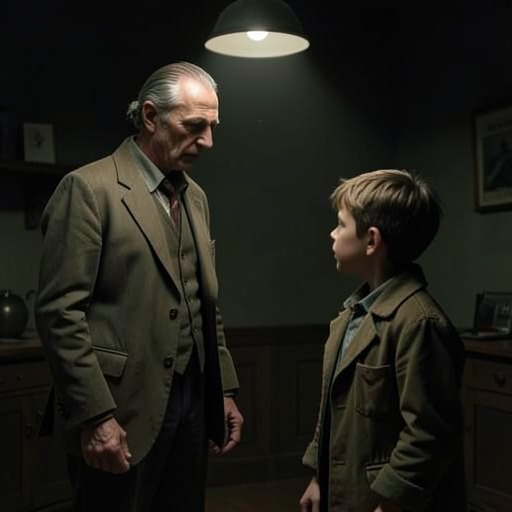
Ben explains that the town had been waiting for Todd to grow old enough to leave on his own, keeping him as innocent as possible. The Mayor, however, was also waiting: for the last boy to become a man. This parallel turns Todd’s birthday into a political deadline. The custom’s ordinary age threshold gives the Mayor a means to target the remaining boy whose participation would complete the process he has imposed on Prentisstown.
Ben frames the Mayor’s ambition through the town’s creed that if one person falls, all fall. If the Mayor could make every boy a man according to his own definition, Ben says, the Mayor could present himself as the creator and controller of them all. Todd is therefore more than a young person approaching the customary age. As the last innocent boy of Prentisstown, he represents the unfinished part of the Mayor’s design. Making him fall would allow the Mayor to claim an army made entirely according to his will. The rite’s coercive power rests not only in the killing itself but in the claim that a boy’s transition into manhood makes him belong to the ruler’s order.
Complicity and Significance
The rite reproduces itself across generations. Men already made complicit watch as a boy is forced into the role they occupy; the new adult is then implicated in the same order. Todd’s realization connects the stories of men who were said to have disappeared with boys he knew who had become men. The change of status is therefore also a transfer of guilt: the town’s violence is concealed, then handed to its next participants as the price of belonging among its adults.
Todd’s position exposes the distinction between being thirteen and accepting the Mayor’s definition of manhood. He is the last boy the town has not yet drawn into the rite, which is why the Mayor’s interest in his coming of age is also an effort to finish a political project. The rule makes killing appear to be the necessary passage into adulthood, but the revelation of its workings shows that this necessity is manufactured and enforced by the town’s ruler and its complicit adults. Prentisstown’s rite is thus both a system of violence and a system of power: it controls who may count as a man, conceals the cost of that status, and turns each new adult into a witness to the order that made him.